Western Digital has been busy restructuring its leadership and technology roadmap following the recent separation of its flash business. From high-speed AI storage architecture to new recycling initiatives for data center hardware, the company is positioning its remaining HDD and storage systems business for a more specialized market.
AI Workflows Drive New Fabric-Attached Storage
The demand for low-latency data access in AI environments has led Western Digital and Ingrasys, a subsidiary of Foxconn, to enter a strategic collaboration. The two companies are developing a new Top-of-Rack (TOR) switch with embedded storage, categorized as a TOR EBOF (Ethernet Bunch of Flash). This hardware aims to provide distributed storage at the network edge, which reduces the need for separate storage networks and avoids the latency of trips to centralized arrays.
The technical specifications for the TOR EBOF include:
- NVIDIA Spectrum-4 switch ASIC for high-performance networking.
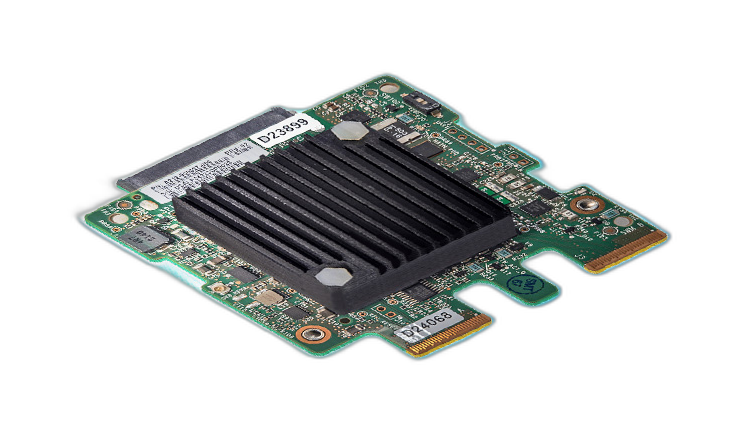
- RapidFlex NVMe-oF bridge technology supporting 100G Ethernet and NVMe/PCIe Gen6.
- Drive slots designed for E3.S/L SSD devices.
- Cabling options for 400/800GbE connectivity.
What stands out visually in this architecture is the removal of firmware from the performance path. According to Western Digital, the RapidFlex technology uses hardware acceleration to allow I/O read and write payloads to flow through the adapter with minimal latency. While the architecture is being led by Western Digital, Ingrasys will handle the manufacturing of the high-density hardware. The companies target 2027 for the availability of the TOR EBOF.
Rare Earth Element Recovery for Data Centers
On a different front, Western Digital is addressing the environmental impact of large-scale storage through a new recycling pilot. In partnership with Microsoft, Critical Materials Recycling (CMR), and PedalPoint Recycling, the company launched a program to recover rare earth elements (REEs) from end-of-life hard disk drives. The pilot processed approximately 50,000 pounds of shredded HDDs and mounting caddies sourced from Microsoft data centers in the U.S.
The program utilizes an acid-free dissolution recycling (ADR) technology. According to the project data, the process achieved a 90% high-yield recovery of elemental and rare earth materials, including Neodymium (Nd), Praseodymium (Pr), and Dysprosium (Dy). Beyond rare earths, the system recaptured gold, copper, aluminum, and steel. 95% reduction in greenhouse gas emissions compared to traditional mining.
Financial Shifts and Shareholder Returns
In related news, Western Digital's Board of Directors has authorized a new $2.0 billion share repurchase program. This move follows the company's initiation of a quarterly dividend program, which declared an initial dividend of $0.10 per share. The repurchase authorization is effective immediately and allows for transactions on the open market or through private negotiations.
These capital allocation strategies come as the company reports its fiscal third quarter 2025 results. Western Digital saw revenue of $2.29 billion, a 31% increase year-over-year. Cloud revenue remains the primary driver, accounting for 87% of total revenue at $2.0 billion. Following the separation of the SanDisk flash business on February 21, 2025, the company ended the quarter with $3.48 billion in cash and cash equivalents.
New Leadership in the Finance Office
To manage this new corporate structure, Western Digital appointed Kris Sennesael as Chief Financial Officer, effective May 12, 2025. Sennesael reports directly to CEO Irving Tan and oversees global finance, accounting, and investor relations. Sennesael brings over 25 years of experience to the role, having previously served as CFO at Skyworks Solutions, Enphase Energy, and Standard Microsystems.
The transition to a standalone HDD and storage systems entity appears focused on capturing the high-scale needs of cloud providers while tightening its domestic supply chain through sustainable material recovery.