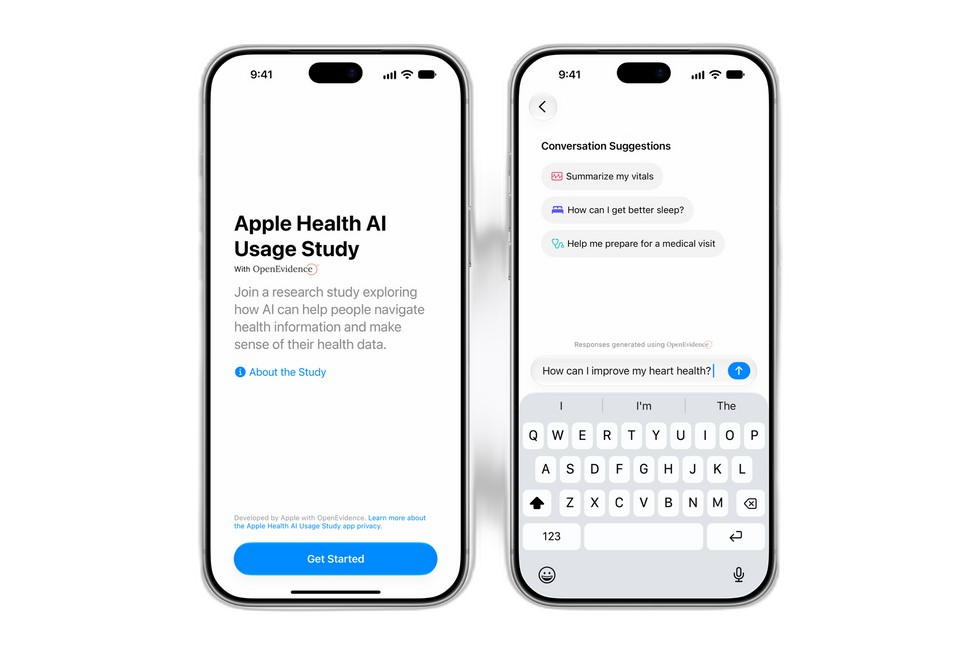
Apple initiates large-scale research into conversational health AI
The digital health landscape is shifting toward generative tools, and Apple has entered the space with a new research initiative. The company launched the Apple Health AI Usage Study in the United States to examine how individuals engage with and trust artificial intelligence in a medical context.
Testing clinical accuracy and user engagement
The study utilizes a dedicated application developed in collaboration with OpenEvidence, a clinical AI platform. Participants use this interface to ask health-related questions and receive responses. What stands out visually is the inclusion of peer-reviewed clinical citations to ground every answer in established medical literature. According to Apple, the study aims to evaluate real-world engagement with these conversational tools.
- The study is open to 200,000 eligible participants in the United States.
- Users must be 21 years of age or older to enroll.
- Hardware requirements include an Apple Intelligence-enabled iPhone, specifically the iPhone 15 Pro or later models.
- The device must be running iOS 26 or a later version of the operating system.
Integration of personal HealthKit metrics
A key technical aspect of the research involves the optional sharing of HealthKit data. Participants can choose to provide the app with access to their heart rate, activity levels, sleep patterns, and lab results. Apple intends to use this information to test if personal data improves the relevance of AI-generated health responses. Regarding privacy, the manufacturer states that study data will not be used to train AI models. The app also features safety guardrails designed to identify concerning queries and recommend professional medical follow-up when necessary.
Insights from this study will help advance the broader scientific conversation and ensure that as technology evolves, we continue building trusted tools that genuinely support people wherever they are on their health journey.
— Apple
Scope and clinical limitations
For those considering participation, the study maintains strict boundaries regarding its utility. The software is not a diagnostic tool and does not provide medical treatments. Apple emphasizes that the study app is not intended to replace the advice of a healthcare professional. Whether this data leads to permanent AI health features in future iOS updates remains to be seen as the study progresses.
The study app is not meant to diagnose or treat any condition, or replace the advice of medical professionals.
— Apple