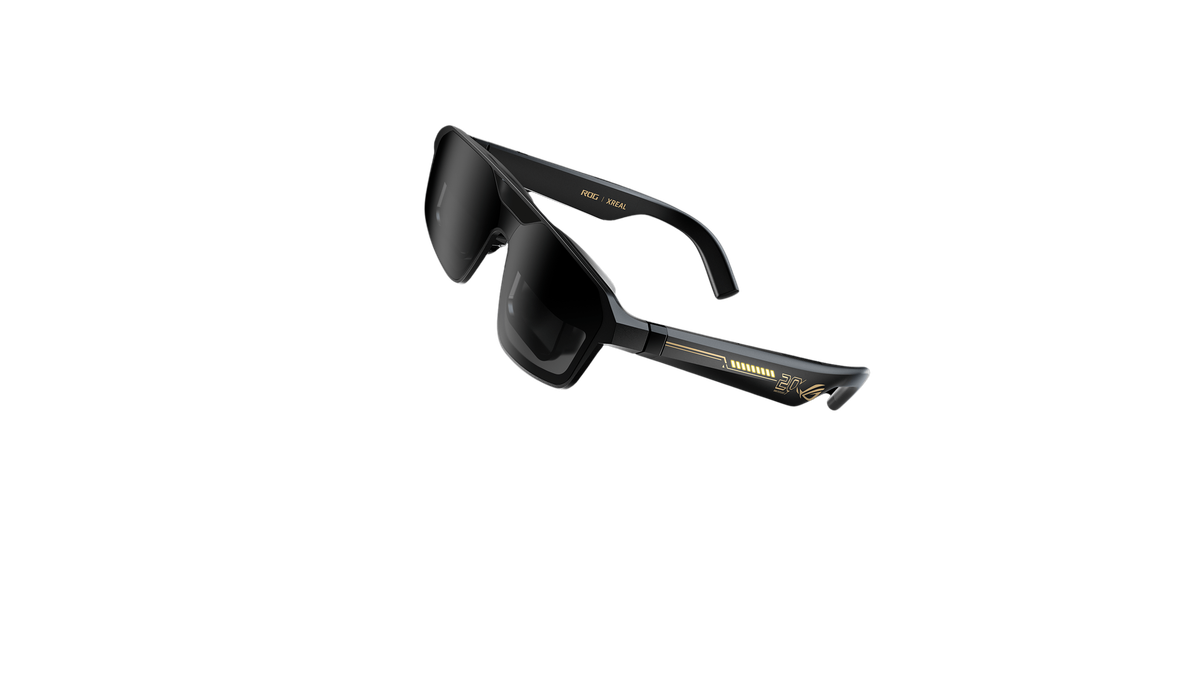
ASUS Expands Handheld Ecosystem with High-Refresh AR Wearable
The market for handheld gaming accessories is shifting toward immersive wearable displays. ASUS has announced the ROG XREAL R1 Edition 20, a pair of augmented reality (AR) glasses designed to function as a portable monitor. This device targets users of the ROG Ally and other mobile platforms who require a large-screen experience without the bulk of a traditional television.
As the handheld PC market grows, manufacturers are looking for ways to bypass the limitations of small integrated screens. The R1 Edition 20 serves as a 91g wearable display that projects a virtual image directly in front of the user's eyes. This move positions ASUS more firmly in the spatial computing space, competing with established headsets and other AR-ready peripherals.
Technical Specifications and Display Performance
The ROG XREAL R1 Edition 20 utilizes Micro-OLED technology to simulate a massive viewing area. According to rog.asus.com, the device creates a 171-inch virtual screen when viewed at a simulated distance of four meters. This allows players to maintain a high-resolution view while remaining mobile or sitting in restricted spaces like airplanes.
Key technical features include:
- 240Hz refresh rate achieved through image scaling for fluid motion.
- 0.01ms response time to minimize input lag during fast-paced gaming.
- 700 nits peak brightness and 106% sRGB color gamut coverage.
- 3-level electrochromic dimming to adjust lens transparency based on ambient light.
- Native 3DoF technology supporting "Anchor Mode" for spatial positioning and "Follow Mode."
- Real-time 2D-to-3D conversion for volumetric visual environments.
Power is delivered via a 1.2-meter USB-C cable using DP Alt Mode. Because the glasses lack an internal battery, they draw power directly from the host device, reducing the overall weight on the wearer's bridge. For audio, the system integrates Sound by Bose technology, utilizing directional speakers to provide tactical cues without requiring external headphones.
Experience a massive, fluid viewing experience in a lightweight 91g form factor, featuring a high-performance 171-inch virtual Micro-OLED screen with an industry-leading 240Hz refresh rate and 0.01ms response time.
— rog.asus.com
Integration with the ROG Ally Ecosystem
The R1 Edition 20 is specifically designed to complement the ROG Ally handheld console. Through the Armoury Crate SE software, users can manage dual-screen controls and adjust visual settings directly from the console interface. This integration allows the glasses to act as a primary or secondary display, depending on the user's preference.
Comfort and accessibility are addressed through adjustable IPD (Interpupillary Distance) settings, ranging from 57mm to 75mm across two sizes. The device also supports prescription lens inserts for users who wear corrective eyewear. To ensure safety during long sessions, the hardware has received TÜV Eye Comfort certification, which verifies low blue light emissions and flicker-free operation.
Market Position and Consumer Utility
Lenovo Legion Glasses and the standard XREAL Air 2 Pro. While the Lenovo alternative offers a similar wearable monitor concept, the ASUS edition emphasizes a higher 240Hz refresh rate, which is currently rare in the AR glasses segment. This makes it a specialized choice for competitive gamers who prioritize frame rates over the standard 60Hz or 120Hz found in many mobile displays.
For most users, the primary benefit is ergonomics. Instead of hunching over a handheld device, players can maintain a neutral neck position while the screen remains fixed in their field of vision. However, the reliance on a wired connection means users must manage a cable tethered to their phone or console at all times.
Availability and Outlook
Whether the R1 Edition 20 becomes a standard accessory for handheld gamers depends on its real-world clarity and the stability of its 3DoF tracking. The inclusion of Bose-tuned audio and electrochromic dimming suggests a focus on premium multimedia use beyond just gaming. As spatial displays become more common, the success of this model will likely hinge on its software compatibility with non-ASUS devices and its long-term wearing comfort.