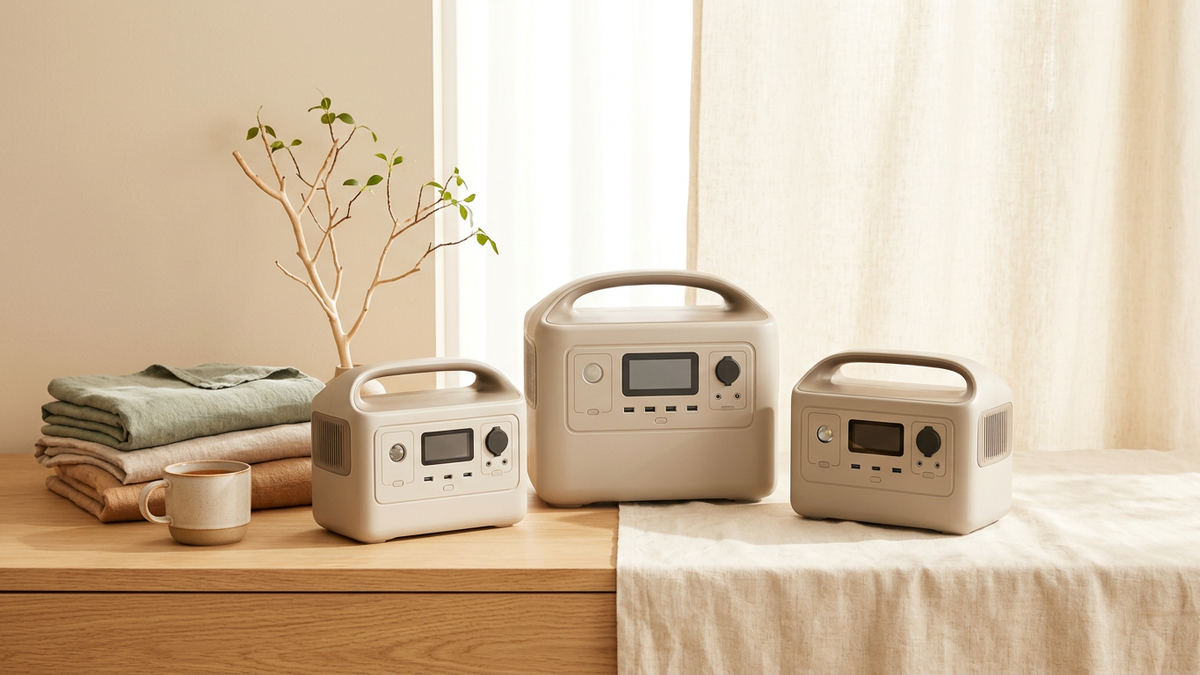
Portable Power Stations for Emergency Prep 2026: Outage Ready
Power outages can strike unexpectedly, leaving you without essential services and a sense of vulnerability. Equipping your home with a reliable portable power station ensures you remain connected, safe, and comfortable when the grid goes down.
- Prioritize LiFePO4 battery chemistry for superior longevity and safety in 2026 models. - Calculate your total wattage and Watt-hour (Wh) needs carefully, especially for critical appliances like refrigerators. - Look for fast AC charging and robust solar input capabilities for versatile recharging during extended outages. - Always choose pure sine wave inverters to protect sensitive electronics. - Consider expandable systems for future-proofing your emergency power setup.Why a Portable Power Station is Essential for 2026 Emergency Preparedness
In 2026, the demand for resilient home power solutions is higher than ever. With increasing weather volatility and grid vulnerabilities, a reliable backup power source is no longer a luxury but a necessity. Unlike traditional, noisy, and fume-emitting gas generators, portable power stations offer a clean, quiet, and user-friendly alternative. These advanced battery systems provide versatile AC and DC outputs, capable of powering everything from essential communication devices to crucial home appliances.
Beyond emergencies, these units are incredibly versatile, serving as a clean power source for outdoor adventures, DIY projects, or remote work setups. However, their primary value lies in providing peace of mind during unexpected blackouts, keeping your family safe, connected, and comfortable.
Before an outage, create a detailed inventory of all devices you'll need to power. Note their running wattage, surge wattage (if applicable), and how many hours you expect to use them. This will be crucial for accurately sizing your power station.Choosing Your Power Lifeline: Wattage, Capacity, and Run Time Explained
Selecting the right portable power station hinges on understanding your specific power requirements. This involves two critical metrics: the power your devices demand (wattage) and the total energy storage needed (battery capacity).
Understanding Wattage: Continuous vs. Surge
- Continuous Wattage (Rated Power): This is the steady power draw of a device while it's operating. Your power station's inverter must be rated to handle the combined continuous wattage of all devices running simultaneously.
- Surge Wattage (Peak Power): Many appliances, particularly those with motors like refrigerators, blenders, or power tools, require a brief, higher burst of power to start up. This momentary demand is the surge wattage. Ensure your chosen power station's surge rating can accommodate the highest peak demand from any single device you plan to use.
For instance, a modern refrigerator might run at 150-200W continuously but could demand 1000-1500W for a split second to kickstart its compressor. Always verify the surge rating of your power station against your most demanding appliance.
Battery Capacity: The Key to Run Time (Watt-hours - Wh)
Battery capacity, measured in Watt-hours (Wh), dictates how long your power station can supply power. A higher Wh rating translates to longer run times. To estimate your needs, multiply the continuous wattage of your essential devices by the number of hours you need them to run.
Example: To power a 75W LED TV for 8 hours, you'd need 75W * 8h = 600Wh of capacity. Remember to factor in a 10-20% efficiency loss from the inverter and account for multiple devices running concurrently.
Watt-hours (Wh) measure the total energy stored in a battery. It's calculated by multiplying the battery's voltage (V) by its amp-hour (Ah) rating. For example, a 12V battery with 100Ah capacity stores 1200Wh (12V * 100Ah = 1200Wh) of energy. This is the most common and useful metric for comparing power station capacities.Sizing Your Power Station for 2026 Emergency Scenarios
For basic emergency needs like charging phones, running LED lights, and a small fan, a 500-1000Wh unit might suffice. If you need to power a refrigerator, essential medical equipment, and several lights for 1-2 days, target 1500Wh to 3000Wh models. For extended outages or comprehensive home backup, larger units (3000Wh+) or modular, expandable systems are ideal. Brands like EcoFlow and Bluetti lead the market with scalable solutions, allowing you to add extra batteries as your needs grow.
Advanced Features and Considerations for 2026 Models
Battery Chemistry: The Dominance of LiFePO4
In 2026, portable power stations featuring LiFePO4 (Lithium Iron Phosphate) batteries are the undisputed gold standard. They offer significant advantages over older Nickel Manganese Cobalt (NMC) lithium-ion batteries:
- Exceptional Longevity: LiFePO4 batteries typically boast 3,000+ charge cycles to 80% capacity, far outlasting NMC batteries (500-800 cycles). This means years of reliable service.
- Enhanced Safety: Their chemical composition makes them inherently more thermally stable, drastically reducing the risk of overheating or thermal runaway, a critical safety factor for indoor use.
- Consistent Performance: They maintain a more stable voltage output throughout their discharge cycle, ensuring consistent power delivery to your devices.
Inverter Type: Pure Sine Wave is Non-Negotiable
Always choose a power station equipped with a pure sine wave inverter. This technology replicates the clean, stable AC power supplied by your wall outlets. It's absolutely crucial for sensitive electronics such as laptops, medical devices (e.g., CPAP machines), and modern appliances, preventing potential damage, malfunctions, or reduced lifespan. Avoid modified sine wave inverters, which can be cheaper but are unsuitable for delicate equipment.
Charging Options and Blazing-Fast Speeds
Versatile and rapid charging capabilities are paramount for emergency preparedness:
- AC Wall Outlet: The quickest way to recharge. Many 2026 models feature advanced fast-charging technology, allowing a 0-80% charge in as little as 60-90 minutes.
- Solar Panels: Indispensable for extended outages. Look for high maximum solar input (W) and pair your power station with compatible portable solar panels. Many manufacturers, including Jackery and Anker SOLIX, offer integrated solar generator kits for seamless setup.
- Car Charger: A convenient option for topping up on the go, though generally slower than AC or solar charging.
Portability vs. Power: Finding Your Balance
There's an inherent trade-off between battery capacity and physical portability. Smaller units (under 1000Wh) are typically lighter and easier to transport. Larger units (2000Wh+) can be quite heavy, often requiring integrated wheels, telescopic handles, or two people to move. Consider your primary use case: will it stay in one place for home backup, or do you need to move it frequently?
Output Ports and Connectivity for Modern Needs
Ensure the power station provides a comprehensive array of ports to meet all your device charging needs:
- Multiple AC Outlets (standard wall plugs)
- USB-A and USB-C ports, ideally with Power Delivery (PD) for rapid charging of laptops and smartphones.
- 12V DC Car Port (cigarette lighter style)
- Wireless charging pads (a convenient feature for compatible smartphones).
- Some advanced models also offer RV-specific outlets or direct DC outputs for specific appliances.
Safety Features and Battery Management System (BMS)
A robust Battery Management System (BMS) is the brain of your power station. It protects against over-voltage, over-current, over-temperature, short-circuiting, and deep discharge, significantly extending battery life and ensuring safe operation. Look for models with comprehensive BMS features and certifications from reputable safety organizations.
Additional Smart Features
- UPS Functionality: Uninterruptible Power Supply (UPS) mode allows the power station to act as a pass-through power source, automatically switching to battery power in milliseconds during an outage. This is vital for sensitive devices like computers or medical equipment.
- Smart App Control: Many 2026 models offer Bluetooth or Wi-Fi connectivity, allowing you to monitor battery status, control outputs, and update firmware remotely via a smartphone app.
- Expandability: The ability to connect additional battery packs or integrate with home transfer switches for whole-home backup is a significant advantage for larger power needs.
Top Portable Power Station Brands to Consider in 2026
The market for portable power stations is competitive, with several brands consistently delivering innovative and reliable products. Here are some of the leaders:
- EcoFlow: Known for their incredibly fast charging speeds, modular designs, and high-capacity options, including home backup solutions.
- Bluetti: Offers a wide range of power stations from small portable units to massive home battery backup systems, often featuring LiFePO4 batteries and robust build quality.
- Jackery: A popular choice for outdoor enthusiasts, known for their reliable, user-friendly, and relatively compact power stations and solar generator kits.
- Anker SOLIX: Leveraging Anker's reputation for charging technology, SOLIX offers durable, high-performance power stations with advanced features and long-lasting LiFePO4 batteries.
- Goal Zero: A long-standing player in the portable power market, offering rugged and dependable solutions for various needs.
Setting Up Your Emergency Power Plan for 2026
Having a portable power station is just one part of a comprehensive emergency plan. Here’s how to integrate it effectively:
- Identify Critical Loads: List essential devices (refrigerator, medical equipment, communication, lighting).
- Calculate Run Times: Estimate how long you need each device to run.
- Choose the Right Station: Select a power station with sufficient wattage and Wh capacity.
- Practice & Prepare: Fully charge your power station regularly. Test it with your critical devices before an actual outage.
- Consider Solar: Invest in portable solar panels for indefinite power during extended blackouts.
- Safety First: Understand how to safely connect and operate all your devices.
Frequently Asked Questions (FAQ)
What's the difference between a portable power station and a solar generator?A portable power station is essentially a large battery with an inverter and various output ports. A "solar generator" is typically a marketing term for a portable power station bundled with compatible solar panels, allowing it to recharge using solar energy. The core device is the power station itself.
Can a portable power station power my entire house?Most consumer-grade portable power stations are designed for individual appliances or critical circuits, not whole-home power. However, larger, modular systems from brands like EcoFlow and Bluetti can be integrated with home transfer switches to provide backup power to select circuits or even an entire small home, especially when combined with multiple battery packs.
How long do portable power stations last?The lifespan depends heavily on the battery chemistry. Power stations with LiFePO4 batteries (common in 2026 models) can last for 3,000+ charge cycles to 80% capacity, which translates to 8-10 years or more of regular use. Older NMC battery types typically offer 500-800 cycles.
Are portable power stations safe to use indoors?Yes, absolutely. Unlike gas generators, portable power stations run on batteries and produce no emissions, fumes, or significant noise, making them perfectly safe for indoor use. Always ensure they are placed on a stable surface and away from excessive heat or moisture.
What's the best way to store a portable power station?Store your power station in a cool, dry place, away from direct sunlight and extreme temperatures. Most manufacturers recommend storing it with a charge level between 50-80% for optimal battery health and performing a full charge/discharge cycle every 3-6 months to calibrate the battery management system.