Ecovacs has been busy expanding its portfolio of home robotics, moving beyond simple vacuuming to integrate advanced artificial intelligence and specialized hardware for complex cleaning tasks. The company’s latest updates span from ultra-slim models designed for tight furniture clearances to high-suction units that rival traditional upright vacuums in raw power.
Ecovacs Pushes Suction Limits with the DEEBOT T90 PRO OMNI
Leading the new lineup is the DEEBOT T90 PRO OMNI, a flagship model that emphasizes high-performance hardware. The device features a 30,000Pa suction system, currently one of the highest ratings in the consumer robot vacuum market. This power is supported by the BLAST system, which delivers an airflow of 16L/s to ensure deep debris extraction from carpets and crevices.
For mopping, the T90 PRO OMNI utilizes OZMO ROLLER 3.0 technology. Unlike traditional vibrating pads, this system uses a 27cm self-washing roller mop spinning at 200 RPM. To address the difficulty of cleaning along walls, Ecovacs implemented TruEdge 3.0, which uses an air-cushion suspended roller with a 1.5cm extended reach. The robot also features a TruePass 4-Wheel-Drive system, allowing it to climb obstacles up to 2.4cm high, which is a notable increase over the standard 2cm threshold found in many competing models like those from Roborock or Dreame.
Beyond raw power, the company also focused on endurance. The T90 PRO OMNI includes PowerBoost Technology, which can provide a 10% battery charge in just three minutes during active cleaning tasks. This allows the unit to cover areas up to 500m² without significant downtime. The accompanying OMNI station automates maintenance with 75°C hot water mop washing and a dustbin that requires emptying only once every 90 days.
High-Performance Cleaning in the T80 Series
On a different front, Ecovacs has introduced the DEEBOT T80S OMNI and the standard T80 OMNI. The T80S OMNI serves as a high-tier alternative, offering 24,800Pa suction and the OZMO ROLLER 2.0 system. This model is designed for homes with varying floor types, utilizing Triple Lift technology to automatically adjust brushes and rollers when transitioning between liquid spills, large debris, and carpets.
The standard T80 OMNI provides a balanced mid-range option with 18,000Pa suction. Both models in the T80 series benefit from AIVI 3D 3.0 technology, which uses a Vision-Language Model (VLM) for real-time obstacle recognition. This AI integration allows the robots to identify specific household objects and adjust their cleaning paths accordingly. The T80 series also features ZeroTangle 3.0, utilizing a triple-V structure and anti-tangle side brushes to minimize hair maintenance.
Ultra-Thin Designs for Hard-to-Reach Spaces
Meanwhile, Ecovacs's design team has addressed the physical limitations of standard robot vacuums with the DEEBOT T50 PRO OMNI. This model features an 81mm ultra-thin frame, significantly lower than the standard 95mm to 100mm height of most LiDAR-equipped robots. To achieve this profile, Ecovacs utilized a fully-embedded dToF LiDAR system, removing the traditional raised sensor turret.
Despite the slim profile, the T50 PRO OMNI maintains 15,000Pa suction. It incorporates TruEdge 2.0, which uses a dynamic side brush and variable mop plate to maintain a 1mm proximity to edges. The device is powered by the YIKO-GPT AI Voice Assistant, allowing users to give complex cleaning commands through natural language, such as asking the robot to clean a specific spill in a specific room.
Compact Solutions and Specialized Window Cleaning
In related news, the company is catering to smaller living spaces with the DEEBOT mini 2. With a width of just 28.6 cm, this unit is designed for apartments where larger robots might struggle to navigate between chair legs. The mini 2 includes a Mini OMNI Station that occupies only 0.13 square meters. Despite its size, it offers 10,000Pa suction and a video manager feature that allows owners to monitor pets remotely via the ECOVACS HOME App.
The company is also making waves with its non-floor cleaning solutions. The WINBOT X marks a shift in window cleaning as a cordless robot. It utilizes a Four-Stage Cleaning System and a Safety Tether System to clean glass surfaces without the restriction of power cables. This follows the company's broader push toward cordless, autonomous utility robots across the entire home environment.
Foundational AI and Navigation Technology
The core of these advancements lies in the ECOVACS AIVI (Artificial Intelligence and Visual Interpretation) technology. First introduced to recognize common obstacles like shoes and cables, AIVI has evolved to process data locally to ensure user privacy. Unless a user opts-in for research, no images are recorded or transmitted to third parties.
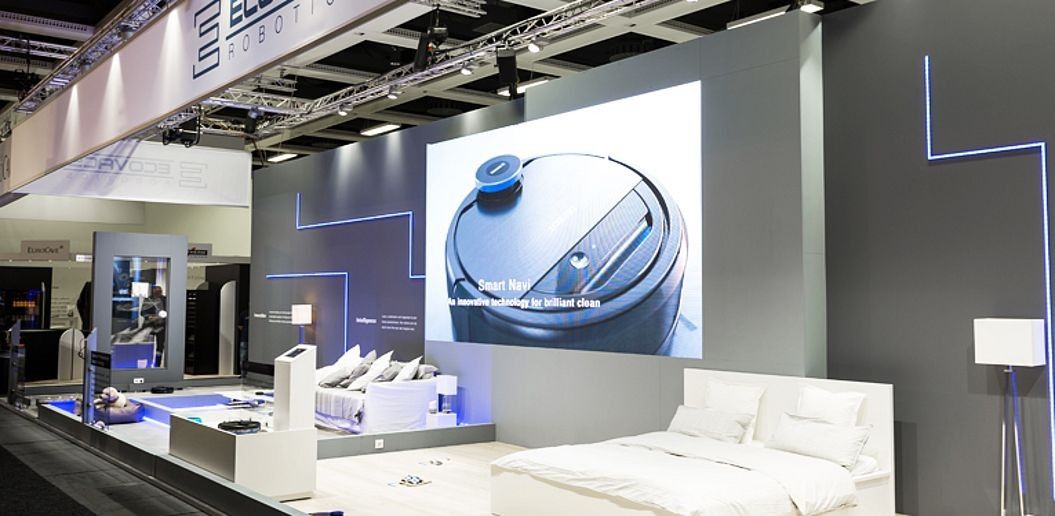
This AI works in tandem with Smart Navi mapping, which scans the home to create efficient cleaning paths. When combined with OZMO mopping, which allows for simultaneous vacuuming and mopping with electronic water flow control, the robots can manage entire floor cycles in a single pass. The integration with Google Home and Amazon Echo ensures these devices fit into existing smart home ecosystems.
As Ecovacs continues to increase suction power and decrease hardware height, the focus has shifted toward reducing human intervention. Features like the 150-day maintenance-free mop tray and 75°C hot water cleaning suggest a future where floor care requires attention only a few times per year. Whether these high-suction ratings and AI features provide a measurable advantage over competitors in real-world environments will be determined as these models reach a wider consumer base.