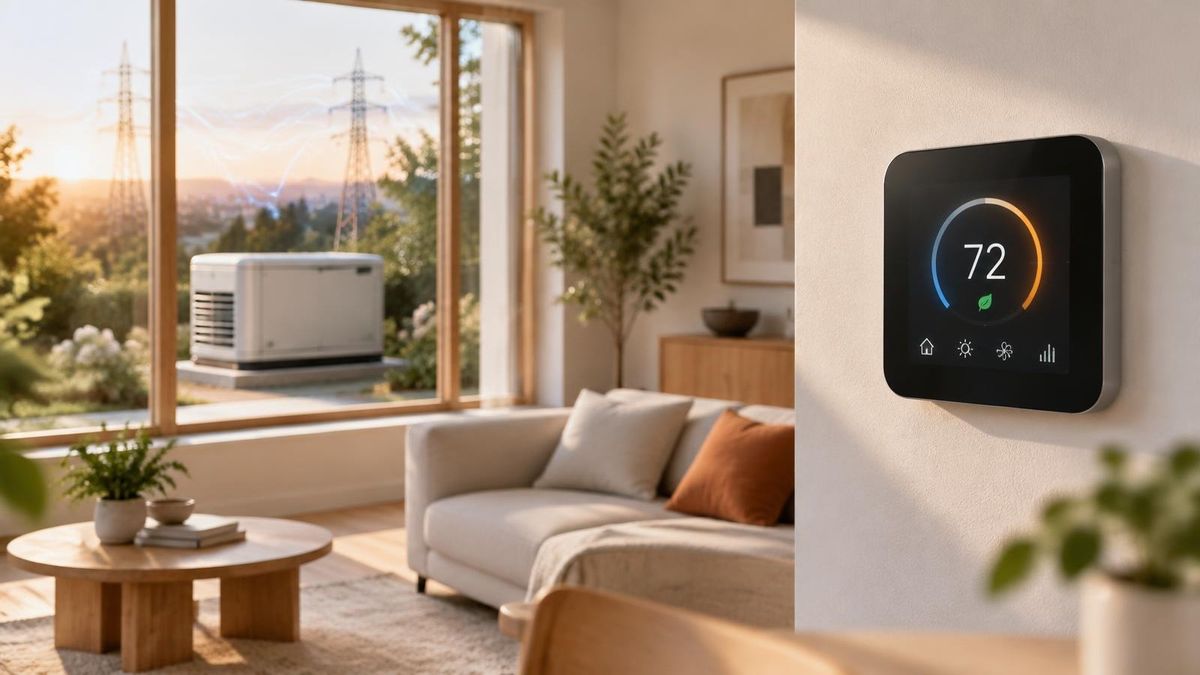
ecobee has been busy expanding its footprint in the smart home and energy management sectors. The company recently announced a series of updates ranging from entry-level consumer hardware to large-scale grid resiliency initiatives, signaling a broader push into both residential and commercial infrastructure.
The Smart Thermostat Essential targets budget-conscious energy savings
The entry-level smart thermostat market has a new competitor as ecobee introduces the Smart Thermostat Essential. According to company data, the unit is designed to reduce annual heating and cooling costs by up to 23%.
The hardware features a full-color touchscreen and a simplified user interface. While it is a budget-friendly model, it maintains compatibility with Apple HomeKit, Google Assistant, and Amazon Alexa. It also supports occupancy detection, though this requires pairing the unit with separate ecobee SmartSensors.
- ENERGY STAR certified for efficiency.
- Includes Home Energy Reports for usage insights.
- Features alerts for potential HVAC system issues.
The company suggests the device can pay for itself through energy savings in approximately six months. This launch aims to lower the barrier to entry for homeowners looking to modernize their climate control without the higher price tag of the company's Premium models.
Generac integration brings backup power management to the wall
Beyond the standalone consumer market, the company is deepening its ties with its parent organization, Generac. PWRcell 2 solar battery storage.
This integration allows the thermostat to provide real-time visibility into backup power status. During a power outage, the system coordinates electrical loads as the generator starts, which can prevent system overloads. By combining these functions into the thermostat, the company aims to reduce total installation costs by removing the need for additional monitoring hardware.
The system utilizes advanced occupancy sensing to adjust energy use based on inhabitant habits. The PWRcell 2 system, which includes the new thermostat, is scheduled to begin shipping in the coming months.
New API expands reach into multifamily property management
On a different front, ecobee is moving further into the commercial sector with the expansion of its SmartBuildings platform. At the recent AHR Expo, the company announced a new API specifically for multifamily operators, such as apartment complexes and condominiums.
This API allows property managers to integrate ecobee thermostats directly into existing Resident Experience Platforms (REPs) or building management systems. This move addresses a common friction point for landlords who previously had to manage multiple individual accounts for a single building. The platform now offers two paths: the SmartBuildings API for custom integrations and SmartBuildings Fleet Management for a centralized dashboard.
The Fleet Management tool provides building-wide visibility, allowing managers to set remote temperature limits and receive real-time alerts across hundreds of units. Pilot programs for the API indicated that these centralized controls led to faster setup times and more efficient HVAC runtime management across large portfolios.
Grid Resiliency service demonstrates virtual power plant potential
The company is also making waves in utility-scale operations. Grid Resiliency (GR) service delivered 108 MW of capacity during peak demand periods. This service operates as a virtual power plant, allowing grid operators to make minor, temporary temperature adjustments to enrolled thermostats to reduce strain on the electrical grid.
A report by Demand Side Analytics (DSA), which analyzed over 143,000 devices across major territories like CAISO and ERCOT
The company estimates that if fully deployed, the service has the potential to unlock 2.8 GW of capacity across the United States and Canada. This represents a significant resource for grid reliability that does not require the construction of new physical power plants.
These developments indicate a strategic shift for the brand. By connecting individual household savings with large-scale property management and national grid stability, the company is attempting to transition from a hardware manufacturer into a comprehensive energy management platform. The success of these initiatives will likely depend on continued consumer adoption and the willingness of utility providers to integrate these distributed energy resources.