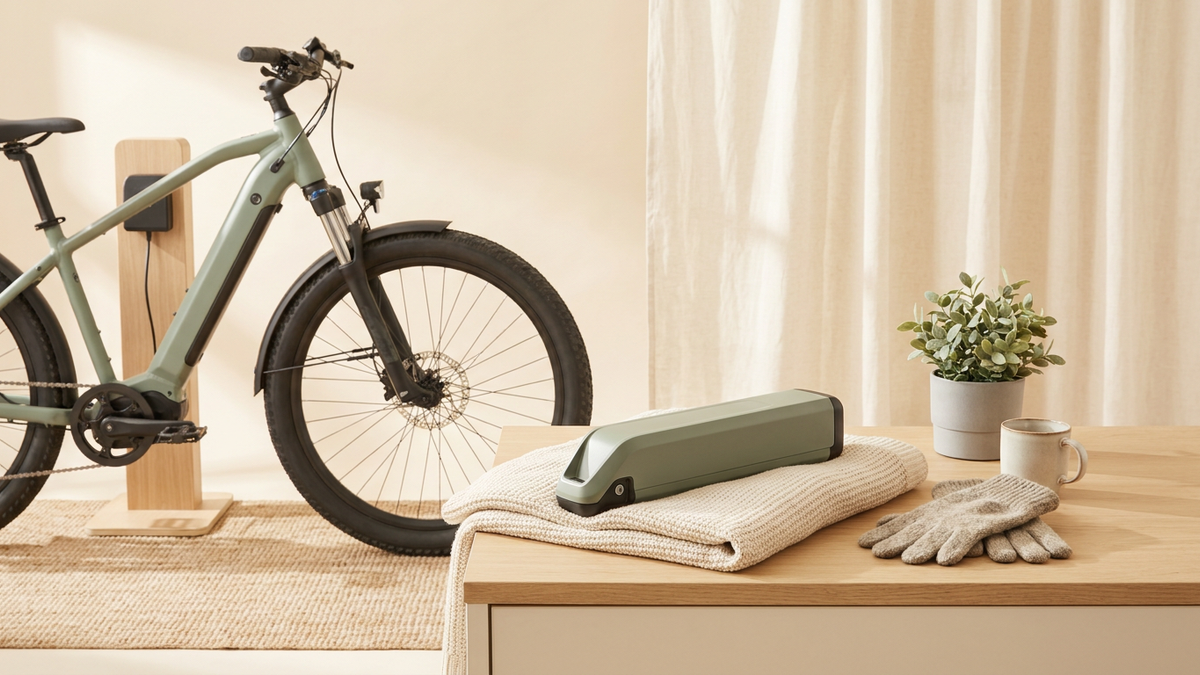
Protecting Your Investment: E-Bike Winter Storage 2026
As the temperatures drop in late 2026, the unique components of your electric bike require specialized attention to survive the frost. Unlike traditional bicycles, the lithium-ion batteries and electronic controllers found on modern machines are sensitive to thermal fluctuations, which can lead to permanent capacity loss if handled incorrectly.
- Store your e-bike battery indoors at room temperature (50°F to 70°F) to prevent cell degradation. - Maintain a charge level between 40% and 70% for long-term storage; never store a battery at 0% or 100%. - Clean and lubricate the drivetrain thoroughly to prevent road salt corrosion during the winter months. - Check tire pressure regularly as cold air causes PSI to drop significantly.The Short Version
If you're short on time: The most critical step for 2026 is removing your battery and storing it in a climate-controlled environment at roughly 60% charge. Never leave your battery in a freezing garage or attached to a charger for months at a time, as this is the fastest way to kill your range.
Before putting your bike away, take five minutes to perform a deep clean. Removing road salt and grime now prevents oxidation that can seize your chain and bolts by the time spring 2027 arrives.Lithium Battery Storage Tips for Cold Weather
The heart of your e-bike is its battery, and cold weather is its primary enemy. In 2026, most high-end models from brands like Segway-Ninebot or NIU utilize advanced Lithium-Ion cells that thrive in temperate conditions but struggle when the mercury dips below freezing.
The Ideal Storage Temperature
While your bike frame can handle the cold, your battery cannot. Chemical reactions inside the cells slow down in the cold, and charging a frozen battery can cause permanent internal damage known as "lithium plating." Always bring your battery inside your home. The sweet spot is between 50°F and 70°F.
The 60% Rule
One of the most common ebike winter storage mistakes is storing the battery fully charged or completely empty. Storing at 100% puts high stress on the cells, while storing at 0% risks the battery falling into a "deep discharge" state where it may never wake up again. Aim for a 40% to 70% charge level. Check the levels once a month and top it off slightly if it drops below 30%.
Never charge your e-bike battery immediately after a cold ride. Let the battery warm up to room temperature for at least two hours before plugging it in to avoid thermal shock and potential fire hazards.Electric Bike Maintenance Checklist
Beyond the electronics, the mechanical components of your bike need a winterization routine. If you are using a high-performance scooter like the VMAX VX4 E-Scooter or a standard e-bike, the following steps are essential:
- Clean the Drivetrain: Use a degreaser to remove old oil and apply a wet-weather lubricant. This creates a thicker barrier against moisture.
- Tire Care: Rubber can harden and crack in extreme cold. If possible, hang your bike or store it on a mat to prevent "flat spots" from forming while the tires lose pressure.
- Check the Seals: Inspect the rubber gaskets around your motor and display. If you plan on e-bike winter riding, ensuring these seals are intact is vital for preventing water ingress from melting snow.
E-Bike Winter Riding: Best Practices
If you aren't hanging up the helmet this year, riding in 2026 requires a shift in tactics. Cold weather reduces your battery range by up to 30-50%. Plan your commutes accordingly and don't rely on the maximum range estimates provided during the summer.
| Condition | Impact on E-Bike | Recommended Action |
|---|---|---|
| Freezing Temps | Reduced Battery Range | Keep battery indoors until the moment you ride. |
| Road Salt | Corrosion on Chain/Frame | Wipe down with a damp cloth after every ride. |
| Icy Roads | Lower Traction | Lower tire pressure by 5 PSI for a larger contact patch. |
For those who need to keep their devices charged during long winter excursions, carrying a high-capacity power bank for your peripherals is a smart move. Check out the Best Power Banks of 2026 for options that handle cold well.
Invest in a neoprene battery cover. These thermal sleeves help retain the heat generated by the battery during operation, effectively extending your range during freezing 2026 commutes.FAQ
Can I leave my e-bike in an unheated garage?You can leave the bike frame and mechanical parts in a garage, but the battery must come inside. If the battery is non-removable, you should move the entire bike to a basement or area that stays above 40°F.
How often should I charge my e-bike during winter storage?Check the battery level once every 30 days. Most lithium batteries self-discharge slowly. If it falls below 40%, charge it back up to about 60-70%.
Does road salt damage my e-bike motor?Yes, salt is highly corrosive. It can eat through the seals of hub motors over time. Always rinse your bike with low-pressure water (never a power washer) and dry it thoroughly after riding on salted roads.
Conclusion
Winterizing your e-bike in 2026 doesn't have to be a chore, but it is a necessity for anyone wanting to protect their multi-thousand dollar investment. By prioritizing indoor battery storage at a 60% charge and maintaining a clean, lubricated drivetrain, you ensure that your bike is ready to hit the trails the moment the spring thaw begins. Whether you are riding through the slush or storing for the season, proper care today prevents a costly battery replacement tomorrow.